
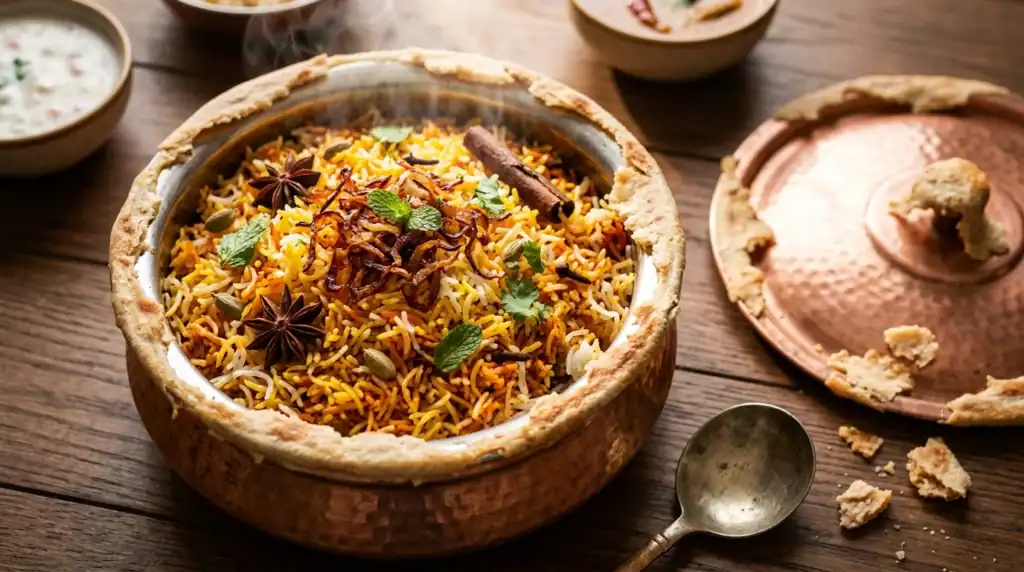
Quick answer: Biryani’s roots trace back to Persia, and the dish took its recognizable form in the Indian subcontinent. The name most likely comes from the Persian words birian (fried before cooking) or birinj (rice). Historians credit Persian cooking, Mughal royal kitchens and Arab trade routes rather than one single inventor.
By the Pepper Fry kitchen team, Mississauga | Last updated: [date]
If you have ever lifted the lid off a pot of dum biryani and felt the steam hit your face, you know this dish carries centuries of history. Whether you are researching the origin of biryani out of curiosity or deciding what to order tonight, this guide explains where biryani really comes from and how it became a favourite in Mississauga.
What Does the Word “Biryani” Actually Mean?
Language is the best clue we have. Most food historians link the word to Persian. Birian means “fried before cooking,” which hints at how rice or meat was prepared in early versions. Birinj simply means rice.
This matters because it points to a Persian influence on the dish before it ever reached Indian kitchens. Persian travellers, soldiers and cooks carried rice-and-meat cooking traditions across the region, and these merged with local spices, herbs and techniques.
Is Biryani Originally from the Middle East or India?
This is one of the most debated questions in food history, and the honest answer is: both played a part.
- The Persian connection: Pilaf-style rice cooking with meat existed across Persia and Central Asia long before biryani.
- The Indian transformation: Once these ideas reached India, cooks layered in saffron, chillies, ginger, garlic, yogurt and whole spices. This is what turned rice-and-meat pilaf into biryani as we know it.
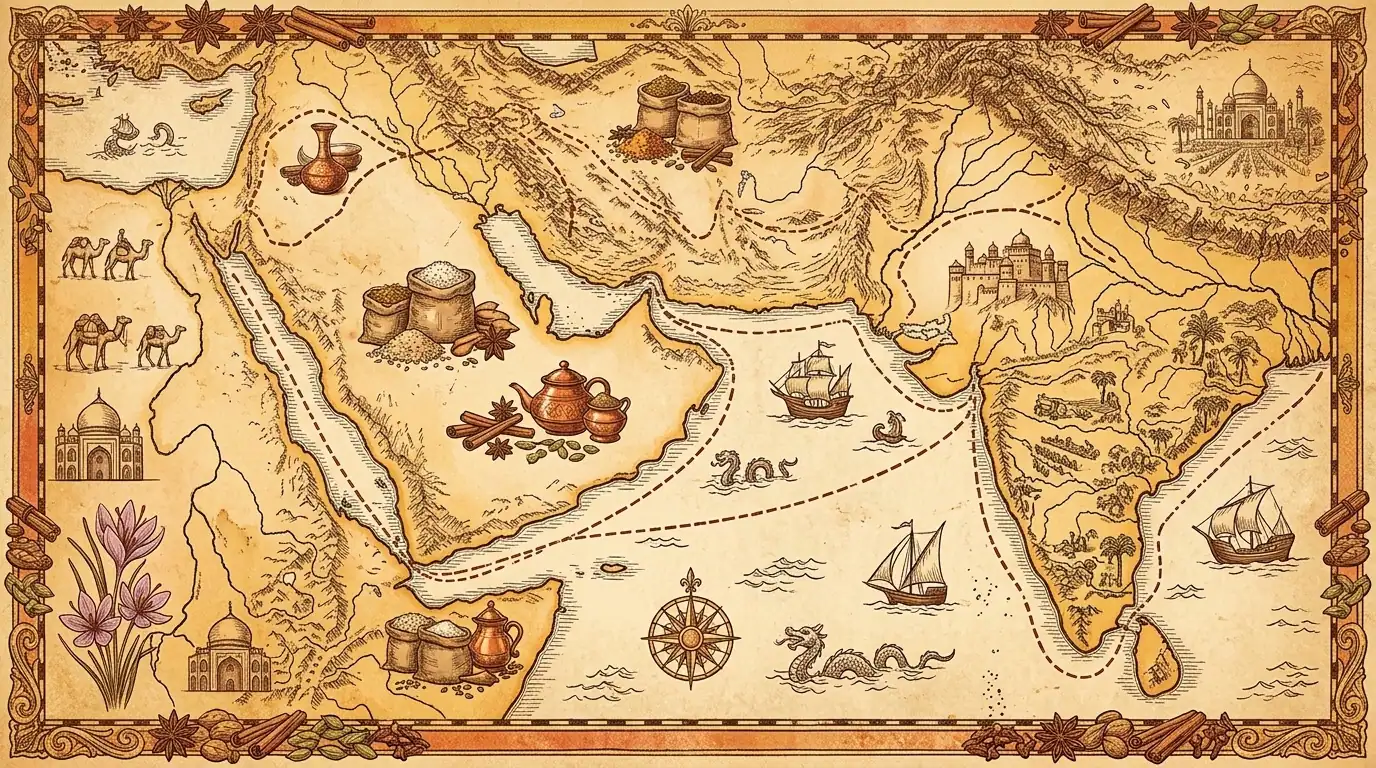
- The trade-route theory: Arab traders reached the Malabar coast in South India centuries ago. Some historians believe their rice-and-meat dishes influenced coastal styles, such as Malabar and Thalassery biryani.
So biryani is best understood as a Persian-influenced dish that was perfected in India, not something that belongs to one country alone.
Who Invented Biryani? Myths vs Facts
You may have heard the popular story that Mumtaz Mahal, the Mughal empress, once visited the army barracks and asked the cooks to prepare a balanced meal of rice and meat for undernourished soldiers. It is a charming tale, but there is no solid historical proof for it.
The fact is that no single person invented biryani. It developed gradually in royal kitchens, army camps and trading towns over many centuries. Mughal courts certainly helped refine and popularize it, but the dish was already evolving by then.
How Hyderabadi Biryani Came to Be
The history of Hyderabadi biryani is where the story gets especially delicious. Hyderabad was ruled by the Nizams, who were known for their royal kitchens and love of lavish food. Their cooks blended Mughal techniques with the flavours of the Deccan, including tamarind, green chillies, mint and local spices.
Two cooking styles became famous:
- Kachchi (raw) biryani: Marinated raw meat is layered with partly cooked rice and sealed to cook slowly on dum (steam).
- Pakki (cooked) biryani: The meat is cooked first, then layered with rice and finished on dum.
The sealed-pot dum method keeps the aroma locked in, which is why a proper Hyderabadi biryani smells so rich when the pot is opened. Today, it is usually served with salan (a tangy gravy) and raita (yogurt).
Beyond Hyderabad: Regional Biryani Styles
India has dozens of biryani traditions. Lucknowi biryani is delicate and aromatic, Kolkata biryani often includes potato, and Malabar biryani uses short-grain rice. In Telangana and Andhra Pradesh, styles such as Karimnagar-style boneless chicken biryani and tangy gongura biryani show how one dish keeps adapting to local taste. Gongura, the sour leaf of the roselle plant, is a signature of Andhra cooking.
Biryani vs Mandi: Are They the Same?
No, and the confusion is common. Biryani is a layered, heavily spiced rice dish from the Indian subcontinent. Mandi comes from Yemen and is much milder: the meat is slow-cooked, often in a pit or tandoor-style oven, and served over fragrant rice flavoured with a gentle spice blend. Both are rice-and-meat classics, but their flavour profiles are very different. If you want to compare them yourself, try both on one table.
Taste Authentic Hyderabadi Biryani in Mississauga
If this history made you hungry, you can taste it close to home. Pepper Fry (Pepperfry.ca Indian Cuisine) is a South Indian and Hyderabadi restaurant in Mississauga, near Heartland and not far from Pearson Airport. (Note: we are a restaurant, not the Pepperfry furniture brand from India.)
Our biryani menu includes:
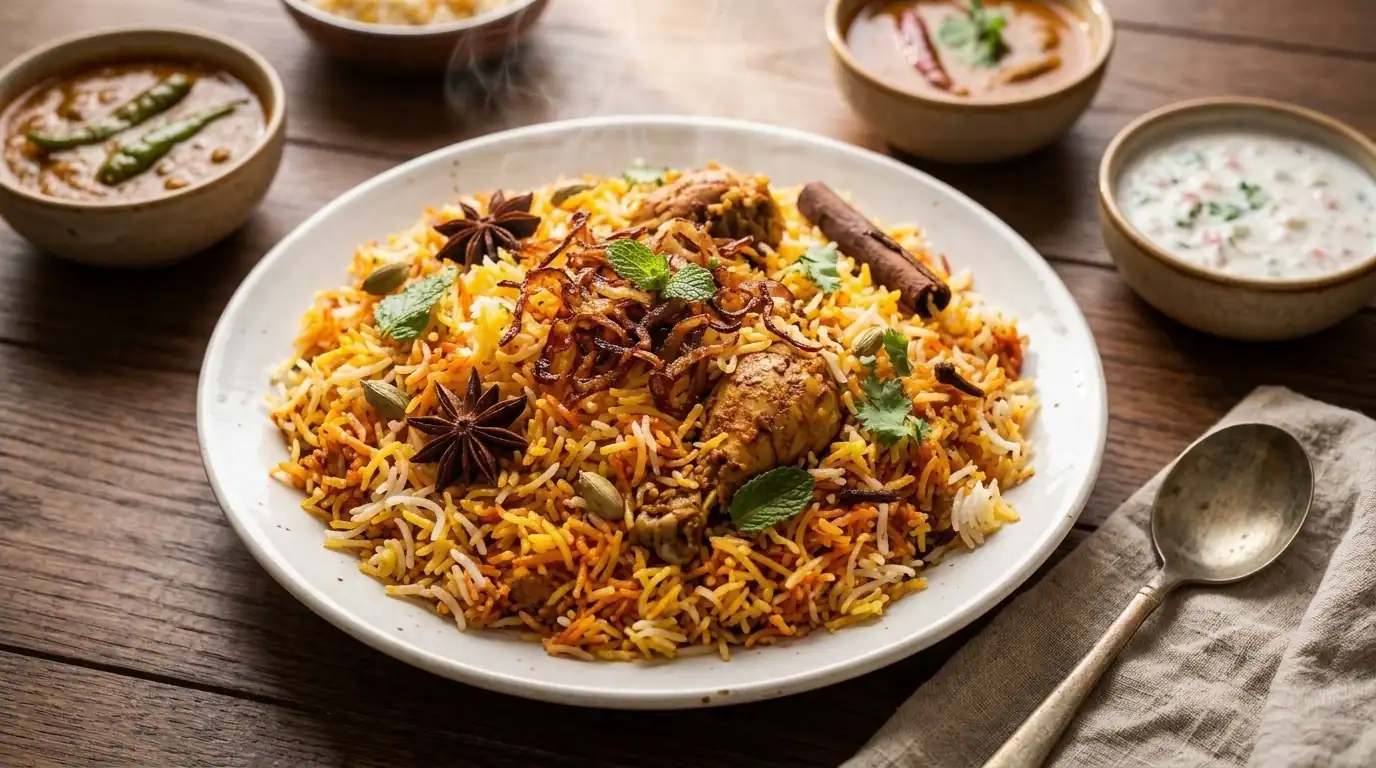
- Hyd Chicken Dum Biryani: marinated chicken cooked with basmati rice and served with salan and raita (from $15.99, medium for 3 people $33.99)
- Karimnagar Boneless Chicken Biryani: Karimnagar-style spices with tender boneless chicken
- Gongura Paneer Biryani: a tangy vegetarian option
- Mutton Biryani and Ghee Roast Mutton Biryani: slow-cooked and rich
- Jumbo Biryani Packs (take-out only): ideal for parties and family gatherings
Prefer something different? Explore our full menu with dosas, Andhra curries, mandi and weekend thali.
Visit us: 1350 Matheson Blvd E, Unit 10B, Mississauga, ON L4W 4M1
Call: +1 905-206-8899
Order: Uber Eats | DoorDash
Book a table: pepperfry.ca/reservation
How to Spot Authentic Biryani (From Our Kitchen)
After [add years/your chef’s experience], here is what we look for, and what you should too:
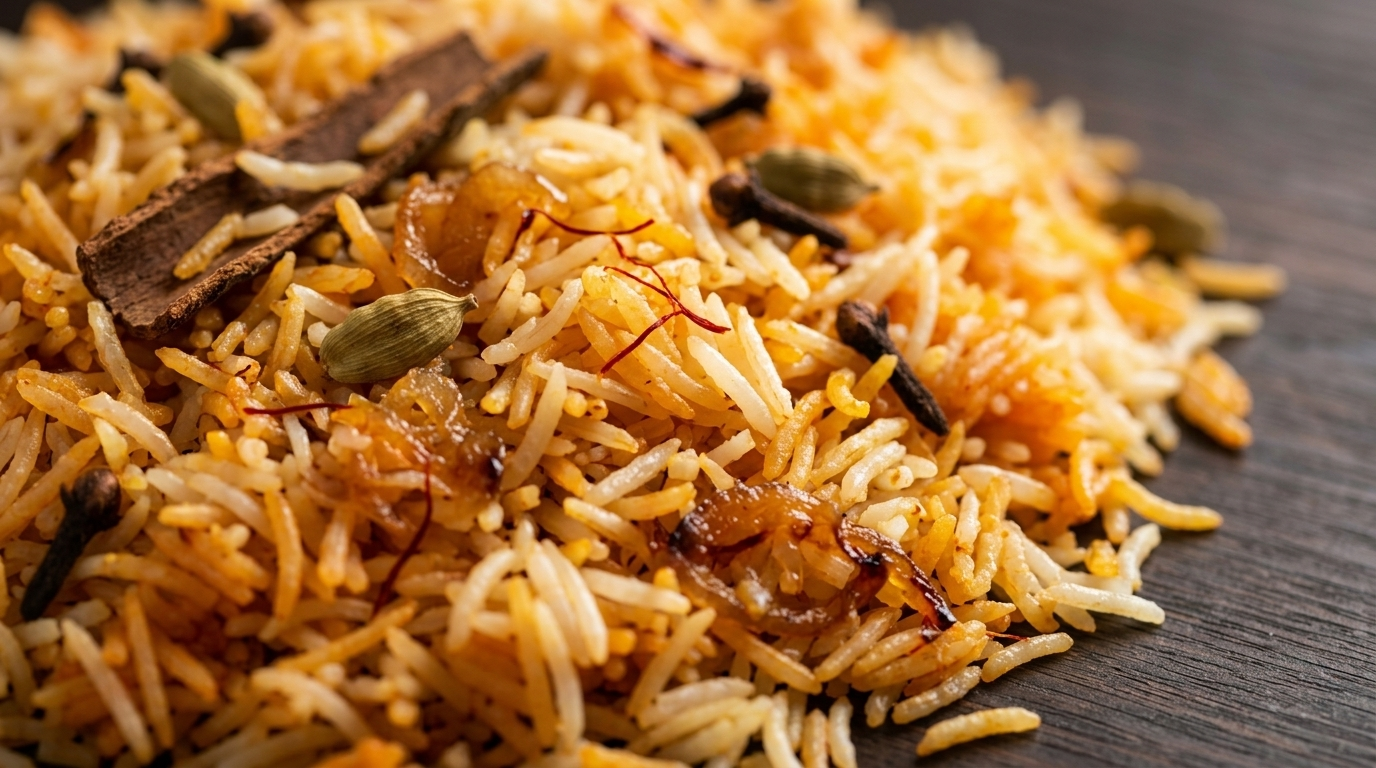
- Separate, fluffy rice grains that are not mushy or clumped.
- Colour that varies through the pot, not one uniform orange from artificial dye.
- Aroma first: whole spices, saffron, ghee and herbs should hit before you taste anything.
- Meat cooked into the rice, not simply placed on top.
- Served with salan and raita, the classic Hyderabadi pairing.
Frequently Asked Questions
Where did biryani originate?
Biryani has Persian roots and was developed into its current form in the Indian subcontinent, influenced by Mughal kitchens and Arab trade.
Which country is biryani from?
There is no single answer. It is a Persian-influenced dish perfected in India, and today it is claimed with pride by India, Pakistan, Bangladesh and beyond.
Is biryani originally from the Middle East?
Rice-and-meat dishes existed across Persia and the Middle East, but biryani as a spiced, layered dish took shape in India.
Who invented biryani?
No one person did. The Mumtaz Mahal story is a popular legend without strong proof.
What is the difference between Hyderabadi biryani and other biryanis?
Hyderabadi biryani uses the sealed-pot dum method and the kachchi or pakki styles, with bold Deccan spicing and a tangy salan on the side.
Where can I find authentic Hyderabadi biryani near me in Mississauga?
Pepper Fry at 1350 Matheson Blvd E serves Hyderabadi dum biryani, Karimnagar biryani and jumbo packs for dine-in and take-out.
Ready to Taste the History?
Skip the guesswork and try a pot of dum biryani made the Hyderabadi way. Order online, reserve a table or call +1 905-206-8899 today.
Further reading: Biryani on Wikipedia | Biryani on Britannica